



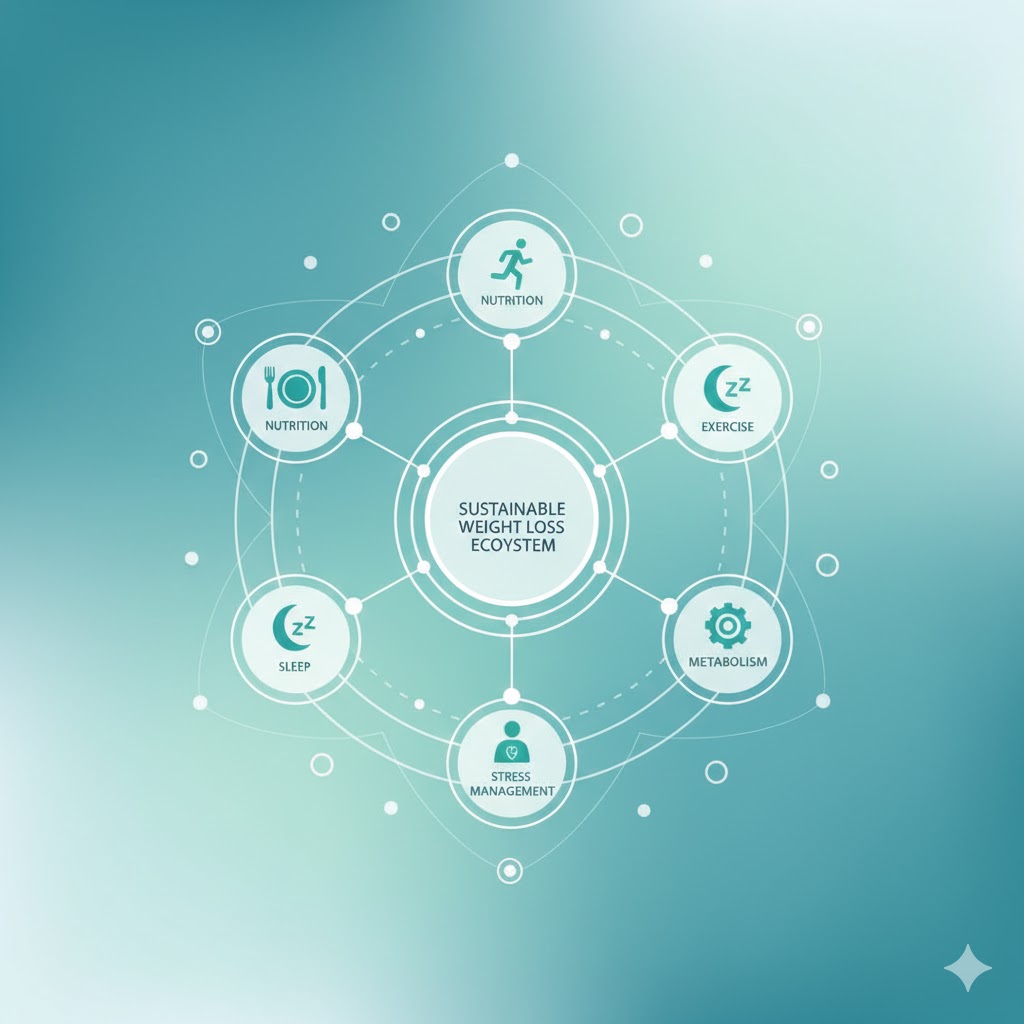
Science-Backed Strategies for Losing Fat and Keeping It Off
Why Most Weight Loss Fails (And How to Fix It)
If you’ve ever lost weight only to regain it, you’re not alone.
Most people don’t struggle because they lack discipline — they struggle because they were taught unsustainable methods. Extreme calorie cuts, fad diets, overtraining, and “miracle” supplements may produce short-term results, but they often trigger:
- Slower metabolism
- Increased hunger
- Hormonal disruption
- Muscle loss
- Rebound weight gain
This creates the familiar yo-yo dieting cycle.
What Sustainable Weight Loss Really Means
Sustainable weight loss is not about restriction.
It is about creating a system that allows fat loss without damaging your metabolism, so results can be maintained for years — not weeks.
This guide will walk you through:
- The science of energy balance
- How to eat for fat loss (without extremes)
- Lifestyle factors that quietly sabotage results
- Exercise strategies that preserve metabolism
- When supplements help — and when they don’t
- How to maintain weight loss permanently
You’ll also find direct pathways into each specialized silo, so you can go deeper where it matters most to your situation.
📑 Roadmap (Table of Contents)
- The Science of Sustainable Weight Loss
- Strategic Eating (Diet & Nutrition)
- Leveraging Lifestyle Factors
- Movement & Muscle (Exercise)
- Targeted Support (Supplements)
- Weight Loss for Specific Needs
- The Long Game: Mindset & Maintenance
- FAQs, Resources, and Next Steps
⚖️ Core Principle: The Energy Balance Equation (The Science)
Every sustainable weight loss method is built on one non-negotiable principle:
You must burn more energy than you consume.
This is known as a caloric deficit.
A. What Is a Caloric Deficit?
A caloric deficit occurs when your body uses more energy than it receives from food. When maintained consistently, the body must draw from stored energy — primarily body fat.
Importantly:
- A deficit does not require starvation
- A deficit does not mean constant hunger
- A deficit should be moderate, not extreme
The most sustainable range:
10–20% below maintenance calories
B. Understanding Metabolism (BMR & TDEE)
Your daily energy burn is called Total Daily Energy Expenditure (TDEE), which includes:
- Basal Metabolic Rate (BMR) — calories burned at rest
- Activity — exercise + daily movement
- Thermic Effect of Food — digestion energy
Extreme dieting lowers TDEE by:
- Reducing muscle mass
- Increasing metabolic adaptation
- Elevating hunger hormones
This is why slow, steady fat loss beats rapid weight loss every time.
C. Why Sustainability Matters More Than Speed
Rapid weight loss:
❌ Increases muscle loss
❌ Disrupts hormones
❌ Raises rebound risk
Sustainable fat loss:
✅ Preserves muscle
✅ Protects metabolism
✅ Improves long-term success
🥗 Strategic Eating — The Fuel Source
Diet Styles Comparison (Choose Sustainability)
| Diet Style | Best For | Pros | Watch Outs |
|---|---|---|---|
| High-Protein Focus Most sustainable | Fat loss + muscle retention | High satiety, preserves lean mass, flexible food choices | Requires planning protein at every meal |
| Blood Sugar Focused | Insulin resistance or Type 2 Diabetes | Appetite control, steadier energy, fewer cravings | Can be restrictive if carbs aren’t chosen strategically |
| Moderate Lower-Carb | Cravings and easier deficit creation | Reduces hunger quickly, simplifies food decisions | May reduce high-intensity athletic performance |
| Intermittent Fasting | Fewer meals & simple structure | Helps adherence by reducing decision fatigue | Avoid if it triggers binging or sleep issues |
| Mediterranean-Style | Long-term health + volume eating | High fiber, nutrient density, heart-health benefits | Protein planning is essential for muscle satiety |
💡 Expert Tip: The best diet is the one you can sustain for months — not days. For structured blueprints and shopping lists, visit: Diet & Nutrition Master Plans →
(Diet & Nutrition Silo)
Diet is the primary driver of weight loss — but not in the way most people think.
The goal is not eating less forever.
The goal is eating smarter.
👉 Deep dive here:
Ultimate Guide to Weight Loss Diet & Nutrition Plans
https://www.thehealthknowledgebase.com/weight-loss/diet-plans/
A. Understanding Macronutrients
- Protein — preserves muscle, increases satiety
- Carbohydrates — fuel activity, affect insulin
- Fats — hormone production, fullness
Higher protein intake is consistently associated with:
- Better fat loss
- Less hunger
- Improved body composition
B. Quality Over Quantity
Calories matter — but food quality shapes appetite and hormones.
Whole foods:
✅ Higher satiety
✅ Better blood sugar control
✅ Less inflammation
Ultra-processed foods:
❌ Easier to overeat
❌ Disrupt hunger signals
C. Structured Eating Approaches (Choose What Fits You)
There is no single “best” diet — only what you can sustain.
Popular approaches include:
- Low-Carb / Keto
→ Best for blood sugar control - Intermittent Fasting
→ Simplifies calorie control - Plant-Based Diets
→ Emphasize fiber and volume
Explore options here:
- Counting macros
https://www.thehealthknowledgebase.com/weight-loss/diet-plans/counting-macros-beginner/ - Anti-inflammatory meal plans
https://www.thehealthknowledgebase.com/weight-loss/diet-plans/anti-inflammatory-meal-plan/
🌿 Leveraging Your Lifestyle — The Holistic Approach
(Natural Methods Silo)
Many people plateau because they ignore non-diet factors.
👉 Full guide:
https://www.thehealthknowledgebase.com/weight-loss/natural-methods/
A. Sleep & Weight Loss
Poor sleep:
- Raises hunger hormone (ghrelin)
- Lowers fullness hormone (leptin)
- Increases cravings
Chronic sleep deprivation is strongly linked to fat gain.
B. Stress & Cortisol
Chronic stress elevates cortisol, which:
- Promotes fat storage
- Targets visceral (belly) fat
- Disrupts insulin sensitivity
C. Hydration & NEAT
- Proper hydration supports appetite control
- NEAT (daily movement) can burn hundreds of calories
Key reads:
- Increase NEAT daily
https://www.thehealthknowledgebase.com/weight-loss/natural-methods/increase-neat-daily/ - Sleep & stress impact
https://www.thehealthknowledgebase.com/weight-loss/natural-methods/sleep-stress-weight-loss/
🏋️ Movement & Muscle — The Engine
Exercise Types Comparison (What to Prioritize)
| Training Type | Main Benefit | Best For | Starting Point |
|---|---|---|---|
| Strength Training Highest ROI | Preserves muscle, supports metabolism, improves insulin sensitivity | Everyone (especially 40+) | 2–3 sessions / week |
| Zone 2 Cardio | Improves endurance, recovery, and metabolic health | Beginners, plateaus, stress management | 30–45 mins, 2–4×/week |
| HIIT | Time-efficient conditioning and post-exercise calorie burn | Intermediate+ (when recovery is solid) | 10–20 mins, 1–2×/week |
| NEAT | Raises total daily calorie burn without “workouts” | Busy schedules, low motivation, beginners | 7k–10k steps/day |
| Mobility | Supports consistency and reduces injury risk | Joint issues, recovery phases, beginners | 10 mins daily |
(Exercise Silo)
Exercise is not about punishment.
It’s about metabolic protection.
👉 Full guide:
https://www.thehealthknowledgebase.com/weight-loss/exercise-workouts/
A. Why Muscle Matters
Muscle tissue:
- Burns more calories at rest
- Improves insulin sensitivity
- Protects against regain
B. Resistance Training + Cardio
Best results come from:
- Strength training (2–4×/week)
- Moderate cardio
- Daily movement
C. Activity as a Lifestyle
You don’t need endless workouts — you need consistency.
Key reads:
- Strength training without a gym
https://www.thehealthknowledgebase.com/weight-loss/exercise-workouts/strength-training-no-gym/ - Cardio vs weights
https://www.thehealthknowledgebase.com/weight-loss/exercise-workouts/cardio-vs-weights-priority/
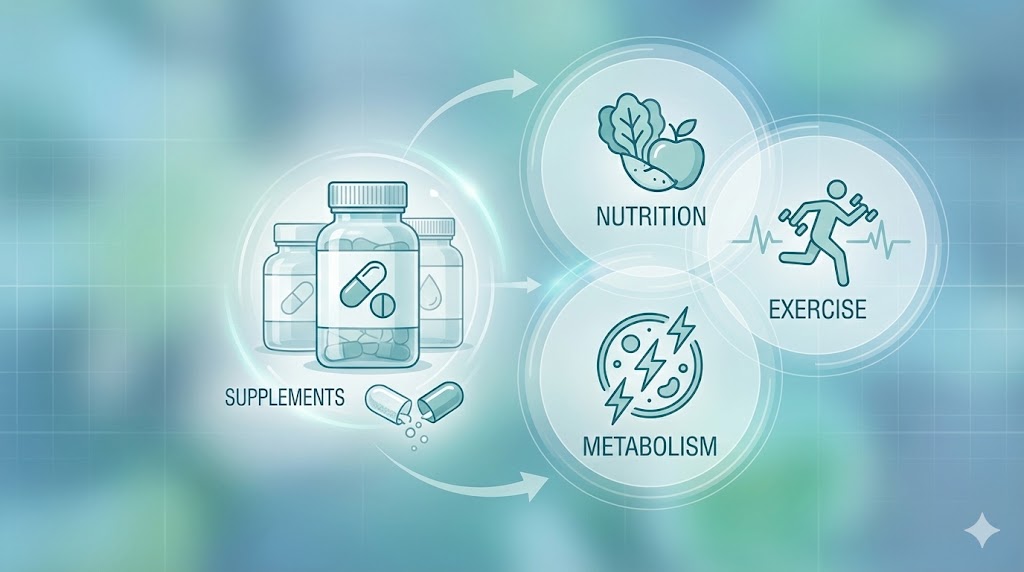
💊 Targeted Support — Accelerating Results
(Supplements Silo)
Supplements are tools, not solutions.
👉 Evidence-based guide:
https://www.thehealthknowledgebase.com/weight-loss/supplements/
Helpful categories:
- Protein & fiber
- Blood sugar support
- Energy & metabolism support
Key reads:
- Thermogenics explained
https://www.thehealthknowledgebase.com/weight-loss/supplements/science-of-thermogenics/ - Fiber for appetite control
https://www.thehealthknowledgebase.com/weight-loss/supplements/fiber-appetite-control/
👥 Weight Loss for Specific Needs (Tailored Strategies)
Women Over 40
Hormonal shifts + muscle loss matter most.
https://www.thehealthknowledgebase.com/weight-loss/women-over-40/
Diabetics
Blood sugar control is non-negotiable.
https://www.thehealthknowledgebase.com/weight-loss/diabetics/
Men
Visceral fat and muscle retention dominate outcomes.
https://www.thehealthknowledgebase.com/weight-loss/for-men/
🧠 The Long Game — Mindset & Maintenance
(Mindset & Maintenance Silo)
Weight loss success is determined after the diet ends.
👉 Essential reading:
https://www.thehealthknowledgebase.com/weight-loss/maintenance-mindset/
Key strategies:
- Habit-based eating
- Managing plateaus
- Transitioning to maintenance
❓ FAQs
1. What is the healthiest way to lose weight long term?
The healthiest way to lose weight long term is by creating a moderate calorie deficit, prioritizing nutrient-dense foods, preserving muscle through strength training, and maintaining consistent lifestyle habits. Sustainable weight loss focuses on fat loss—not rapid scale changes—and supports metabolic health, hormone balance, and mental well-being.
2. How fast should sustainable weight loss be?
A sustainable rate of weight loss is typically 0.5–1 kg (1–2 pounds) per week. Faster weight loss often increases muscle loss, hunger, and rebound weight gain. Slower, steady fat loss is far more likely to be maintained long term.
3. Why do most diets fail?
Most diets fail because they rely on restriction instead of sustainability. Severe calorie cuts, food elimination, and unrealistic rules often slow metabolism, increase hunger hormones, and lead to binge–restrict cycles. Without a maintenance plan, weight regain is common.
4. Is metabolism damage real?
Metabolic adaptation is real, but it is not permanent in most cases. Extreme dieting can temporarily reduce calorie burn by lowering muscle mass and increasing energy efficiency. Rebuilding metabolism requires adequate nutrition, strength training, stress management, and time.
5. Can supplements help with sustainable weight loss?
Supplements can support sustainable weight loss, but they cannot replace diet and lifestyle changes. Certain supplements may help with appetite control, protein intake, blood sugar regulation, or energy levels. They work best as tools—not solutions—within a structured plan.
6. Is cardio or strength training better for weight loss?
Both are useful, but strength training is essential for sustainable weight loss. It preserves muscle mass, supports metabolism, and improves insulin sensitivity. Cardio can increase calorie burn, but without resistance training, long-term fat loss is harder to maintain.
7. How does sleep affect fat loss?
Poor sleep disrupts key hunger and fullness hormones, increasing appetite and cravings. It also reduces insulin sensitivity and recovery capacity. Consistently getting 7–9 hours of quality sleep significantly improves fat loss outcomes and adherence.
8. Why do weight loss plateaus happen?
Plateaus occur when the body adapts to weight loss by reducing energy expenditure or increasing hunger. This is normal. Breaking a plateau may require adjusting calories, increasing strength training, improving sleep, or managing stress—not eating less indefinitely.
9. How do hormones affect weight loss?
Hormones like insulin, leptin, ghrelin, cortisol, and thyroid hormones regulate appetite, fat storage, and metabolism. Chronic stress, poor sleep, and extreme dieting can disrupt these hormones, making weight loss harder despite calorie control.
10. Can sustainable weight loss still work after 40?
Yes. While metabolic rate and muscle mass naturally decline with age, sustainable weight loss after 40 is very achievable by prioritizing protein intake, strength training, sleep quality, stress management, and realistic calorie targets.
🔗 Related Articles
- Weight Loss Hub
https://www.thehealthknowledgebase.com/weight-loss/ - Diet Plans
https://www.thehealthknowledgebase.com/weight-loss/diet-plans/ - Exercise Guides
https://www.thehealthknowledgebase.com/weight-loss/exercise-workouts/
Build a Weight Loss Plan That Actually Lasts
Sustainable weight loss isn’t about extreme dieting or quick fixes. Inside our Weight Loss Hub, you’ll find science-backed diet plans, exercise strategies, supplement education, mindset tools, and condition-specific guidance — all designed for long-term results.
Explore the Weight Loss Hub →